German Football’s Financial Health and Attendance Records: A Practical Review
German professional football is one of the few leagues in Europe where a stadium atmosphere and a club’s annual report are discussed with equal passion. Bundesliga clubs are governed by licensing rules that force them to show financial stability, while the famous 50+1 ownership rule keeps supporters at the centre of most big decisions. The result is a football product that often feels as solid as the concrete terraces it plays in front of.
Yet the numbers deserve more than a quick glance. Financial health affects which manager can be hired, whether the railway station can handle matchday crowds, and how long a club can hold on to a promising academy player. Attendance records, meanwhile, reveal how much the supporter experience matters in a league that could easily sell its soul for higher prices. Three findings shape the rest of this review:
- German football’s stability comes from institutional design, not just good management. The licensing system, the distribution of television money, and the voting rights held by club members create a culture where clubs often grow slowly instead of collapsing dramatically.
- Attendance records are stronger when read as a signal of affordability and trust. Large crowd figures look impressive, but the more important takeaway is that Bundesliga fans continue to show up because they feel the matchday experience belongs to them.
- Financial health is uneven across the two professional divisions. Top clubs may post rising revenues while smaller clubs fight to keep their licence. Therefore, the overall picture is not one single success story but a collection of different budgets, pressures and ambitions.
For this review, the focus is not on complex balance-sheet ratios or speculative investment strategies. It is about what German football’s financial health means for the person who buys a ticket, travels to the stadium, joins a membership scheme or simply watches from home through a streaming subscription.
The Budget Rules That Make German Football Look Different
Financial health in German football is not left entirely to the goodwill of wealthy owners. The Deutsche Fußball Liga runs a licensing procedure before each season, which means the 18-club Bundesliga and 18-club 2. Bundesliga must submit detailed budgets, forecasts and evidence that they can pay their obligations during the season ahead. If a club cannot meet those criteria, its licence can be refused, or the club may be hit with points deductions. This creates an unusual standard: teams need to earn the right to start the season.
This approach has limits. The licensing process is a financial check, not a guarantee of long-term solvency. A manager can still sign too many players, a sponsor can default, or television income can fall because of a broader economic downturn. What the system does do is push clubs toward honesty. Rather than publishing promotional numbers and hoping nobody notices, a German club must produce documents that the league office will inspect. For the everyday fan, this means lower surprises and more trust in the claim that their club is not overspending itself into crisis.
The 50+1 rule further shapes the financial culture. Rule 50+1 says that in most professional clubs, the parent membership organisation must retain majority voting control over the licensed football company. Commercial investors can buy into a club, but they normally cannot outvote the members on board decisions. There are exceptions for companies with long histories, such as Bayer Leverkusen and Wolfsburg, which were founded by Bayer and Volkswagen. However, the general principle remains: supporters, not shareholders, have the last word. That arrangement is often described as old-fashioned by international investors, but it has kept many clubs close to their community roots.
Television money in Germany also seems to behave differently compared with some of Europe’s other big leagues. Broadcasting income is still the largest single revenue block for most clubs, but the distribution model is built around stability. Clubs receive money based on a formula that includes recent performance, youth development, and long-term criteria. This means that the gap between the richest Bundesliga team and the bottom of the second division is less extreme than the gaps seen in some other European leagues. For a supporter, the consequence is obvious: an away game in the second division is still a reasonably professional event, and promotion does not immediately guarantee an astronomical financial advantage.
None of this suggests that the German system has discovered a magical source of free money. Clubs still struggle, budgets still stretch, and some clubs still need external help. But the overall financial rhythm is slower and more cautious than the boom-and-bust pattern that has overtaken clubs elsewhere.
 Hình minh hoạ: https://o8kjc.org/
Why Ticket Prices and Fan Ownership Matter
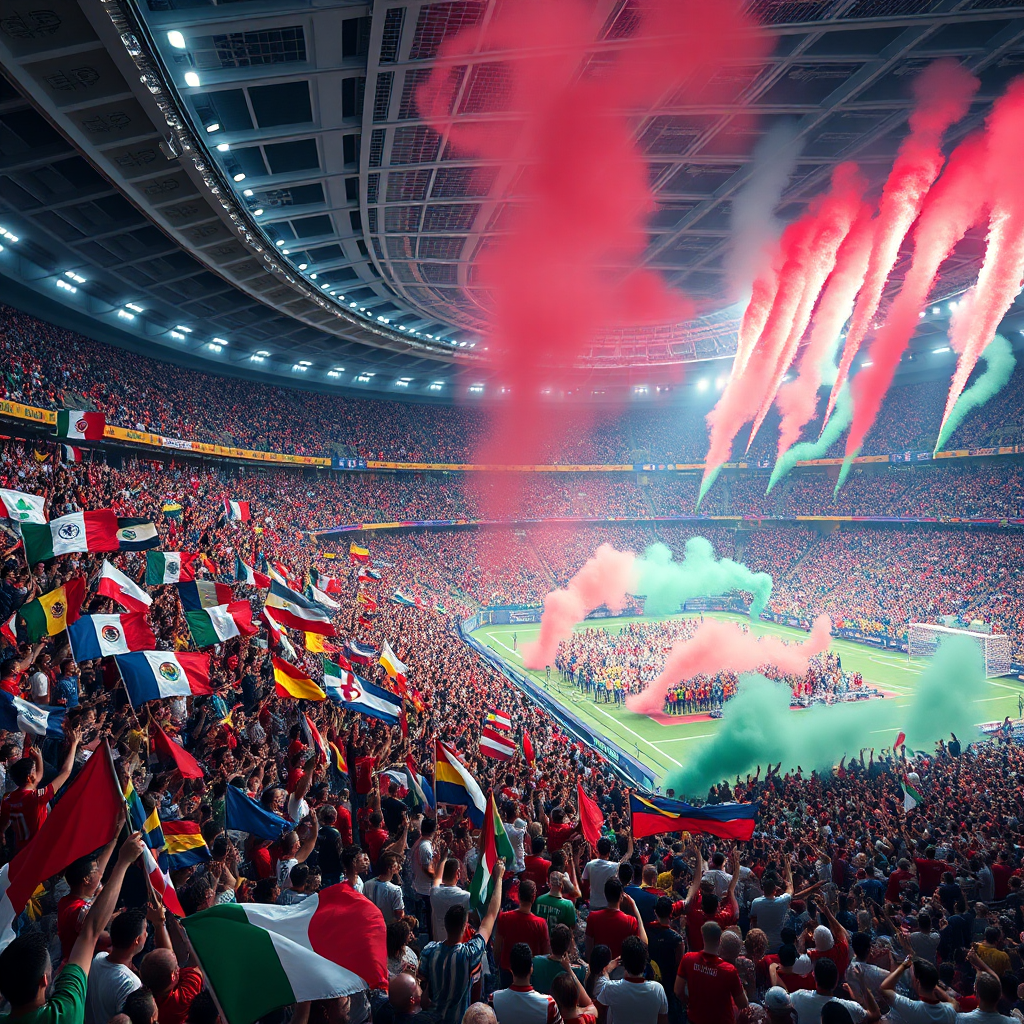
German football’s attendance records are not simply a by-product of large stadiums. They are connected to the price a fan pays, the experience they receive and the emotional ownership they feel. In the years before the pandemic, the Bundesliga regularly posted the highest average attendance in European football, with many matches selling out weeks in advance. The standing terraces, which are still legal in Germany, allow clubs to pack supporters into safe, affordable areas without forcing every spectator to pay premium seating prices. Safe standing has also been introduced with rail seats, allowing clubs to convert standing sections into seats for European competition nights.
The affordability of German football is an important part of this story. Although ticket prices have risen over time, the Bundesliga still holds a reputation for being less expensive than the Premier League or La Liga when viewed from a typical supporter’s wallet. Clubs often protect their most faithful fans through cheap season-ticket prices in the standing areas. This does not mean that tickets are cheap everywhere, but the overall pricing structure is designed to attract young supporters, families and elderly fans.
Attendance records in Germany are also closely tied to the membership model. Many top clubs report enormous membership numbers, which include fans who never attend live matches. That membership is both a financial foundation and a political voice, because members can vote at annual meetings, debate budgets and sometimes overturn proposals made by club executives. When German fans protest against ticketing rules or ownership changes, they are not simply being noisy. They are using a governance mechanism that exists inside the club itself.
Perhaps the most refreshing part of German matchday culture is that attendance records are not treated as marketing gimmicks. Clubs do not often boast about “world records” on social media. Instead, they quietly mention that the ground has been sold out for several consecutive seasons. That kind of success says less about the size of the crowd and more about the relationship between the club and the city around it.
How Healthy Money Becomes an Everyday Experience
For the regular visitor to a German football match, financial health does not feel like a spreadsheet. It feels like a clean turnstile entrance, an app that accepts a digital ticket without freezing, a queuing system that moves smoothly at halftime, and a stadium that has improved its toilets, food outlets and disabled-access facilities. Stadium improvements are expensive, and they are rarely financed by ticket sales alone. A financially healthy club can use sponsorship revenue, transfers and broadcasting funds to reinvest into the stadium experience rather than simply pouring everything into player wages.
The quality of infrastructure matters more than many spectators realise. Germany has a strong railway network, and many municipalities work closely with clubs to provide extra trains after late matches. This cooperation succeeds because the club, the city and the supporters are all connected through local governance. When club money is managed responsibly, the club can invest in better LED lighting, more accessible commentary, improved audio systems and safer crowd control. Those are the things that a fan notices only when they are done badly.
Money also affects the quality of football analysis available to the public. Financially sound clubs tend to have better communication departments, more transparent media channels and more resources for explaining transfer decisions. This matters because a fan who understands why a player was sold is more likely to accept the decision than one who hears nothing until the news appears on a third-party tracker. Open communication is not always a financial metric, but it is an everyday quality metric.
That said, the relationship between money and experience is not always positive. Clubs that spend heavily on the playing squad may still neglect the fan experience. Larger broadcast deals can push kick-off times around the calendar, creating difficult journeys for supporters. Financial health should therefore be measured not just by total revenue but by how the club chooses to convert that revenue into useful value for members, season-ticket holders and away supporters.

The Stress Points Behind the Glossy Figures
German football’s financial health should not be romanticised. The same licensing system that prevents clubs from spending money they do not have can also hold back ambitious projects. A club in the 2. Bundesliga may secure a place in the promotion race, then discover that the wage ceiling imposed by its budget prevents it from buying the extra quality needed to make that push successful. Financial caution and sporting ambition often fight against each other.
Wages remain the biggest single cost for most professional football clubs. In recent years, some German clubs have pushed their wage-to-turnover ratios close to uncomfortable levels, spending more than 70 percent of their income on salaries and related player expenses. That is sustainable when television money arrives on time and transfers gain the expected fees, but it becomes dangerous when a club misses out on European qualification.
The governance model has also faced external pressure. In 2023 and 2024, the German Football League explored the idea of selling a share in its commercial operations to a private investor, arguing that the league needed fresh capital to compete with international rivals. The plan faced massive protests from supporters, who suspected that the new money would come with a loss of control. Those protests show that financial health is not just about how much money enters a club; it is also about who controls the decision-making when that money arrives.
Another concern is the gap between the top of the Bundesliga and the lower half of the table. Clubs that qualify for the Champions League can earn three times as much as clubs that finish mid-table. While German distribution is relatively fair compared with some other leagues, the pressure from a small group of elite clubs still distorts the market for players. Coaches and sporting directors often complain that the transfer market is not national but international, which means German clubs must compete against English and Spanish teams that can offer higher wages.
For any supporter who follows transfer stories, there is also the matter of personal financial risk. Whenever a fan engages with football-related digital platforms, the number one rule is to understand the money movement before handing over any personal details. Budget limits, time limits and a clear exit route should be part of the experience.

German Football Compared on a Financial Habit Scale
| League Context | Ownership & Fan Voice | Matchday Affordability | Reporting & Controls |
|---|---|---|---|
| Bundesliga | Prominent fan voting rights through 50+1; members influence major off-pitch decisions. | More cheap standing tickets available; strong reputation for accessible pricing. | Strict league licensing requires financial documents every year. |
| Premier League | Ownership concentrated in wealthy private investors; supporters often have less formal power. | Higher price bands; greater variation between expensive London clubs and northern clubs. | Profit and sustainability rules provide controls, but the league model is more commercialised. |
| La Liga | Mix of member-run clubs and privately owned entities; two giants dominate most discussions. | Extreme range from very cheap lower-division tickets to premium prices at the biggest stadia. | League-imposed salary caps and economic control measures are strict on paper. |
The table above is not a ranking of moral superiority. It is a reminder that every league makes trade-offs between the pursuit of money and the protection of tradition. The German model is not perfect, but it has built a system where attendance records and financial stability are allowed to reinforce one another rather than cancel each other out.
Who Should Lean Into This Analysis and Who Should Not
This type of review is most valuable for a specific set of readers. First, the travel-heavy football supporter who wants to attend matches in Germany and wants to know whether a club is likely to exist in its current form for the next few seasons. Second, the fan organisation that is negotiating with club management about ticket prices and membership rights. Third, the independent analyst writing a blog about league-wide spending patterns. Fourth, the marketing professional who wants to understand why German clubs emphasize community over exclusivity. For all these readers, the financial health of German football is not an abstract concept; it is a practical part of the matchday relationship.
On the other hand, there are readers who should skip this analysis. Investors looking for a pure financial return should remember that a football club is a difficult asset to treat as a conventional business. If you want to buy shares in a German club and expect standard shareholder dividends, the 50+1 rule will regularly stand in your way. Similarly, fantasy football fans who care only about goals and assists may find this discussion far too dry. Fantasy line-ups are not built from Stadium utilization percentages. And supporters who simply want a one-off ticket to a famous match do not need to audit the club’s balance sheet first; they just need to buy through the official club website.
The most important group that should pay attention is the ordinary fan who reads about another European club collapsing into administration and wonders whether the same thing can happen to their own team. In Germany, the answer is complicated but generally reassuring. The licensing system does not prevent poor sporting performance, but it does provide an early warning system that many other countries lack.
A Skeptic’s Guide to Reading Club Figures
The single best habit you can develop when reading about football finances is to check the definition of the words being used. Turnover, revenue, profit and net debt are often calculated differently in different reports. A club may call itself profitable after selling a home-grown academy player for a large fee, but that profit might be a one-off event rather than a reliable annual stream. Before trusting any headline, ask whether the figures are based on operating business or on one lucky transfer window.
A second good habit is to look at wages as a percentage of revenue. This ratio tells you how much room a club has left for new training facilities, stadium repairs and emergency cash. A club that spends nearly everything on player salaries can seem healthy during the summer, when transfer income arrives, but looks fragile the following spring if those salaries are still being paid with no matching performance bonuses.
Third, verify that the club has access to a genuine safety net when things go wrong. In Germany, that safety net sometimes comes from the parent membership organisation, sometimes from loans raised against future stadium income and sometimes from local business partners. A club that relies on only one sponsor or one wealthy individual is more vulnerable than a club that spreads its income across many sources.
Fourth, remember that digital platforms can be useful tools, but they require the same careful judgement as any other financial service. When an online platform asks for personal information, payment details or identity documents, its money-movement rules should be obvious before you commit. One way to build this habit is to read the registration page and the withdrawal policy side by side before submitting any data. For example, the o8 đăng ký page at https://o8kjc.org/rut-tien-o8/ shows how a single landing page can outline what a new user provides and what happens next, making it easier to decide whether the service fits your expectations. For ongoing updates about that platform, visit https://o8kjc.org/.
Finally, treat every number with a degree of humility. Football clubs are made of human beings, and humans make strange decisions. A financially healthy club can still hire the wrong coach, sell the wrong player or alienate its fan base with a poorly planned merchandise launch. Financial metrics are useful tools, but they are not crystal balls.
Frequently Asked Questions
Is the Bundesliga the most financially stable league in Europe?
Stability is measured in many different ways. The German licensing system gives the Bundesliga a strong institutional structure, but it is not immune to club troubles. Some clubs have faced insolvency proceedings, even while the league maintained its overall reputation. The model is better described as cautious and transparent rather than completely safe.
Do attendance figures include standing tickets?
Yes. German attendance records usually count tickets sold for people who entered the stadium, including those in standing terraces. This is different from the “tickets distributed” figures sometimes used in other countries, where unused corporate seats may still be counted.
Why are German matchday tickets cheaper than English ones?
Multiple factors explain the difference. German clubs are accustomed to standing terraces, which require lower investment per seat and sell for lower prices. Fan culture also influences the price, because club members often vote against sharp price increases. Finally, German television money is split relatively evenly, so clubs are less dependent on squeezing every extra euro from home supporters.
Can the licensing system prevent a club from going bankrupt?
It can reduce the risk, but it cannot eliminate it. The licensing process checks budgets and forecasts before a season begins. Unexpected events, such as relegation, sponsor withdrawal or rising player wage claims, can still push a club into difficulty. Financial controls are valuable precisely because they encourage clubs to build a buffer against such surprises.
Your Action Checklist
Whether you plan to visit a German stadium, join a club membership or track financial data from abroad, keep these final tasks in mind:
- Choose one official source per club. Follow the club’s own investor and supporter communications so you can compare official numbers with independent reporting.
- Read the licensing explanation. When the DFL publishes the list of licensed clubs for the next season, check whether any team has been given restrictions or conditions.
- Study the wage-to-revenue ratio. If it looks inflated for more than two consecutive seasons, treat future transfer claims with extra caution.
- Compare attendance against stadium capacity, not just against previous years. A fall from 99 percent to 91 percent may still represent a nearly full ground.
- Confirm your own digital safety habits. Before registering anywhere, examine the verification steps, the payment rules and the withdrawal conditions so you know exactly what you are joining.
- Budget responsibly for any matchday activity. Football should never become an impulse purchase that damages your monthly finances.
German football’s financial health is not a perfect story. It contains arguments about external investors, dangerous wage growth and inequality between the two professional divisions. Yet compared with many other industries and leagues, German football still provides a useful example of how money can be managed with the supporter’s voice still audible. The attendance records will keep setting new milestones, but the most valuable record will always be the trust between a club and its community.